
Permits and code rules for commercial flat roofing in Connecticut
By Dana Whitfield · Updated 2026-08-15
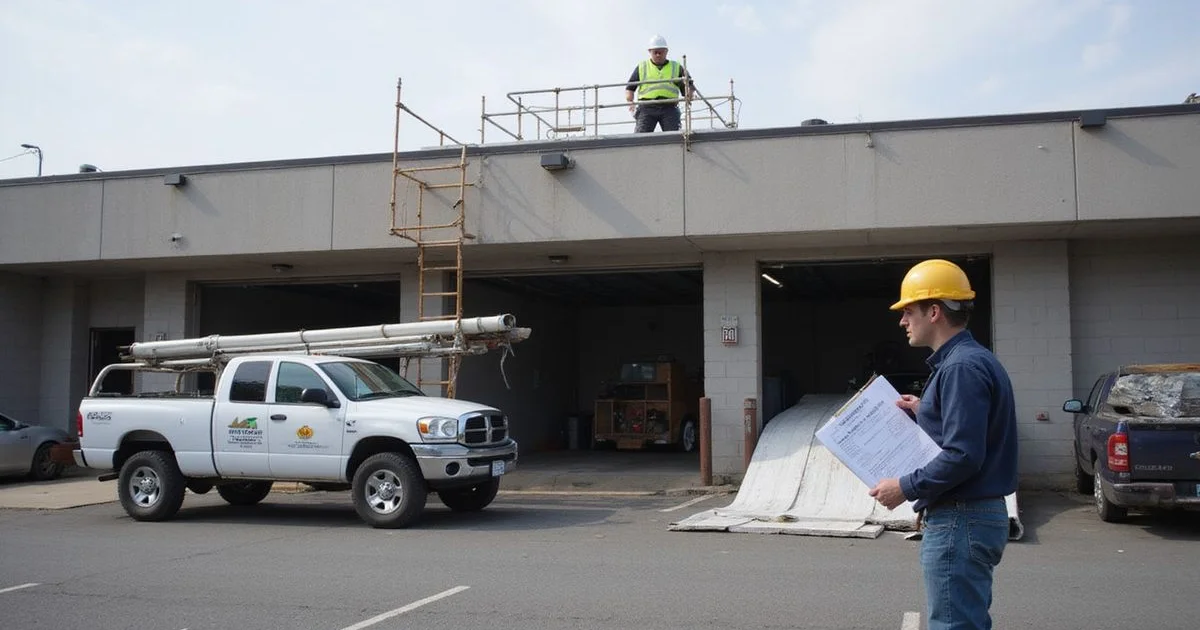
Commercial flat roofing carries a layer of regulatory oversight that residential roofing usually does not, and property owners who skip the permit and code conversation can end up with problems that surface long after the roofing crew has gone home, sometimes during an insurance claim or a property sale rather than during the job itself.
This guide gives general information about permits and code considerations for commercial flat roofing in Connecticut. Requirements vary by municipality and building type; confirm specifics with your local building department before starting a project.
Why permits matter more for commercial roofs
Commercial buildings are typically subject to more detailed code requirements than single-family homes, covering structural load, fire rating, drainage, and insulation performance. A building permit is the mechanism that confirms the work meets those requirements before it is covered up by the finished roofing system. Skipping this step, even if the work itself is done competently, can create real problems later: complications with a future insurance claim, issues during due diligence if the property is sold, or code enforcement action if the work is discovered during an unrelated inspection.
What typically requires a permit
| Project type | Permit typically required |
|---|---|
| Full roof replacement or re-roofing | Yes, in most municipalities |
| Structural repair (deck replacement, added load) | Yes |
| Minor patch or maintenance repair | Often not, but confirm locally |
| Rooftop equipment installation affecting the roof membrane | Often yes |
| Re-cover over existing system without tear-off | Varies by scope and local code |
Requirements vary by town in Connecticut, so the same project can have different permit requirements depending on where the building sits. Your contractor should be able to tell you what is required for your specific project and municipality, but the property owner is ultimately the one who benefits from confirming it rather than assuming the contractor handled it.
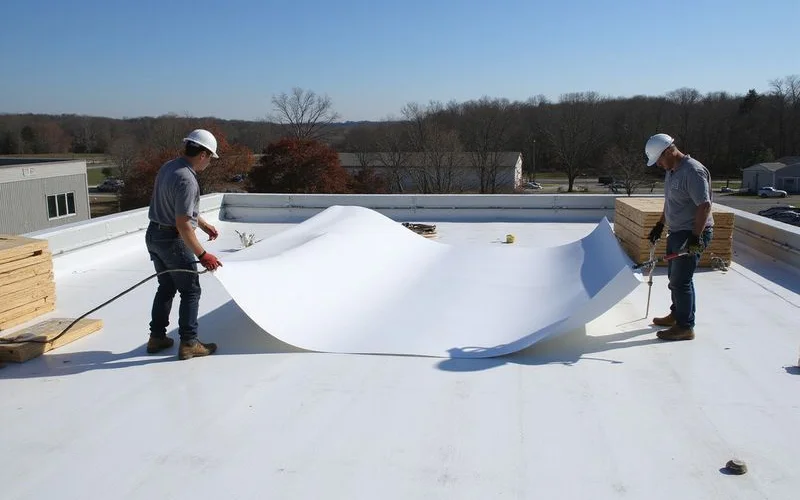
Common commercial flat roofing systems and what they involve
Most Connecticut commercial flat roofs use one of a handful of membrane systems: TPO, a single-ply plastic membrane with welded seams; EPDM, a synthetic rubber membrane joined at seams with adhesive or mechanical fasteners; or modified bitumen, an asphalt-based system reinforced with synthetic polymers and applied in overlapping sheets. Each has different maintenance needs and expected lifespans, and a qualified commercial roofing contractor should be able to explain which system fits your building’s specific drainage, insulation, and budget requirements, and what code provisions apply to that system’s installation.
Inspections and what happens after the work is done
A permitted job typically includes one or more inspections by the local building official before the work is signed off, checking things like membrane attachment, drainage slope, and flashing at roof edges and penetrations. Keep the final inspection approval and permit paperwork on file with your other building records. If the property is ever sold or refinanced, or if a future insurance claim involves the roof, this paperwork is often the first thing requested to confirm the work was done to code.
Working with your contractor on compliance
Ask directly whether the contractor will pull the permit as part of the job, and get confirmation once it is issued rather than assuming it happened in the background. A reputable commercial roofing contractor works with local code requirements routinely and should not treat this as an unusual or burdensome request. If a contractor seems eager to skip the permit process entirely to save time or cost, treat that as a signal worth taking seriously rather than a convenience worth accepting.
Before you sign a contract
Confirm the scope of work explicitly addresses code compliance, drainage requirements, and who is responsible for pulling permits and scheduling any required inspections. This protects you if a dispute arises later about whether the work was done to code, and it avoids the more costly scenario of discovering compliance gaps during an insurance claim or property transaction years down the line. The Connecticut contract law guide covers what a compliant written contract should include, residential or commercial.
When you are ready to get quotes, comparing flat and commercial roofing contractors in Connecticut with specific commercial project experience is a reasonable starting point, and this directory’s rubric page explains how those listings are scored and ranked.
Permits and code compliance are not the most exciting part of a roofing project, but they are the part that protects your investment long after the crew has left the site. Browsing roofing contractors across Connecticut is a reasonable starting point for the wider search, even for a commercial property owner.
FAQ
- Does a commercial flat roof replacement always require a permit in Connecticut?
- Most full replacements and significant structural repairs require a building permit from the local municipality, though rules can vary by town and the scope of work. Confirm with your local building department before work begins.
- Who is responsible for pulling the permit, the property owner or the contractor?
- Contractors typically pull the permit as part of the job, but the property owner should confirm this happened rather than assume it. Unpermitted work can create problems later with insurance claims, property sales, or code enforcement.
- Does insurance require code-compliant roofing work on commercial buildings?
- Many commercial property insurance policies expect work to meet current code, and unpermitted or non-compliant roofing work can complicate a future claim. Check with your insurer or broker about specific requirements.
- What roofing systems are common on Connecticut commercial flat roofs?
- TPO, EPDM, and modified bitumen are the most common flat and low-slope commercial roofing systems, each with different installation and maintenance requirements a contractor should be familiar with.