DIY roof repair vs hiring a pro: what is actually safe
By Dana Whitfield · Updated 2026-08-08
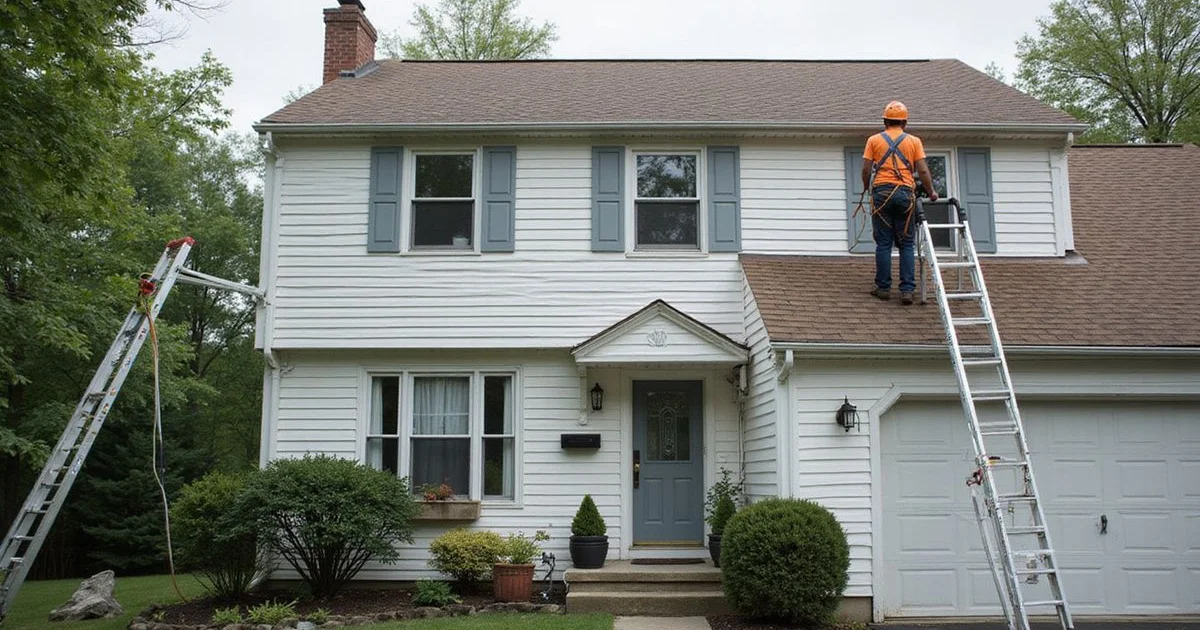
There is a real appeal to fixing a small roof problem yourself: it feels faster, cheaper, and manageable for a handy homeowner. Some tasks genuinely are reasonable to handle without a professional. Others carry a level of fall risk that is easy to underestimate, especially because roof work often looks simpler from the ground than it actually is once you are standing on the surface.
This guide gives general safety information, not a substitute for your own judgment about your specific roof, physical condition, and comfort with heights. When in doubt, hire a professional.
Tasks with manageable risk for a comfortable DIYer
- Clearing debris from gutters using a stable, properly footed ladder, staying off the roof itself.
- Visual inspection from the ground with binoculars to spot obviously missing or curling shingles.
- Checking attic ventilation and insulation from inside the attic, which involves no roof access at all.
- Replacing a single, easily reached shingle on a low-pitch, single-story roof in dry conditions, if you already have appropriate footing and experience.
Tasks that carry real risk and are better left to a professional
| Task | Why it is riskier than it looks |
|---|---|
| Walking a steep-pitch roof | Loss of footing risk increases sharply above a moderate slope |
| Any work above one story | Fall height alone significantly raises injury severity |
| Flashing repair around chimneys or vents | Requires precise technique; a poor repair often leaks worse than before |
| Repair in wet, icy, or windy conditions | Traction and stability both drop, even for experienced roofers |
| Anything near power lines | Adds electrocution risk on top of fall risk |
| Full tear-off or large-area repair | Requires equipment, disposal, and manpower most homeowners do not have |
Falls from roofs and ladders are a significant and well-documented cause of serious home injury, and the risk does not shrink just because a repair looks small from the driveway. A one-shingle fix that requires walking across a wet, steep roof to reach it is a different risk profile than the shingle replacement itself suggests.
Ladder safety, even for ground-adjacent tasks
Most DIY roof injuries actually happen on the ladder, not the roof itself. Use a ladder rated for your weight plus tools, set it on firm and level ground, maintain three points of contact while climbing, and avoid overreaching to the side, which is one of the most common ways ladders tip. A second person holding the base steady adds a meaningful margin of safety even for a quick, simple task like a gutter cleaning.
What professional crews have that most homeowners do not
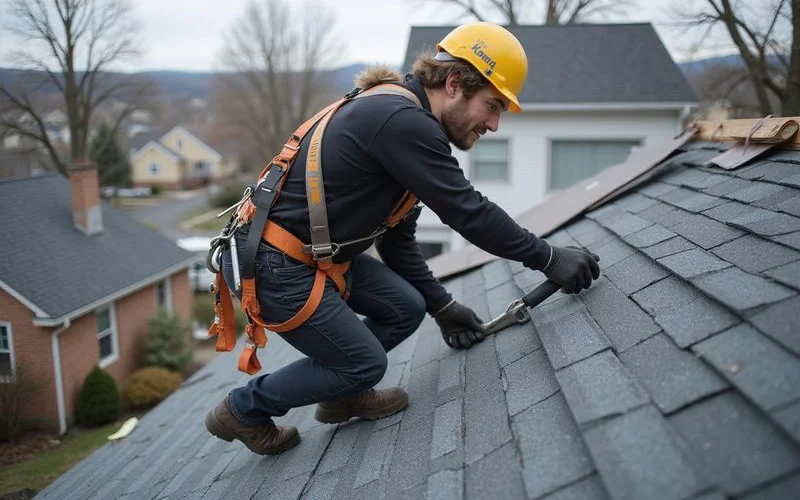
Beyond experience, professional roofing crews typically use harnesses tied to roof anchors, roof jacks that create stable working platforms on steep pitches, and ladder stabilizers that prevent the kind of slip that causes many DIY falls. This equipment is not just a nice-to-have; it is what allows a professional to work safely in conditions that would be genuinely dangerous without it.
When a small problem might be a bigger one
A missing shingle or a small stain on the ceiling can be a minor, isolated issue, or a visible sign of a larger problem underneath, like compromised decking or a flashing failure feeding water somewhere less obvious. If you cannot fully diagnose the cause and scope of a problem from the ground or the attic, it is reasonable to treat it as unknown rather than assume it is simple, and get a professional opinion before deciding whether it is a DIY job at all.
Making the call
If a task keeps you on the ground or in the attic, and you are comfortable and equipped for it, it is a reasonable DIY candidate. If it requires walking the roof surface, especially anything steep, high, wet, or near power lines, the safer and often ultimately cheaper choice is calling a professional. You can compare roofing contractors across Connecticut if you decide a job is better handled by a pro, and this directory’s rubric page explains how those listings are scored.
The honest calculation is not just “can I physically do this,” it is “what happens if something goes wrong while I try.” For most roof work above the gutter line, that answer tips clearly toward hiring a professional.
FAQ
- Is it ever safe to do roof repair myself?
- Minor, ground-reachable tasks like clearing debris from a gutter with a stable ladder, or replacing a single accessible shingle on a low-pitch, single-story roof, carry manageable risk for someone comfortable on a ladder. Anything involving walking the roof surface itself is a different level of risk.
- What makes a roof repair dangerous for a homeowner to attempt?
- Steep pitch, roof height above one story, wet or icy conditions, and working near roof edges or power lines all increase fall risk significantly. Falls from roofs are a leading cause of serious home injury, and the risk does not scale down just because a repair looks small.
- Do professional roofers use safety equipment homeowners typically do not have?
- Yes. Harnesses, anchor points, roof jacks, and proper ladder stabilizers are standard for professional crews and rarely owned or used correctly by homeowners attempting a one-time repair.
- How do I know if a roof problem is actually a small fix or a bigger issue?
- If you cannot fully assess the cause and extent of the damage from the ground or from inside the attic, treat it as an unknown rather than assuming it is minor. A professional inspection is a low-cost way to find out before you attempt anything yourself.