
Emergency roof damage: what to do first
By Dana Whitfield · Updated 2026-07-22
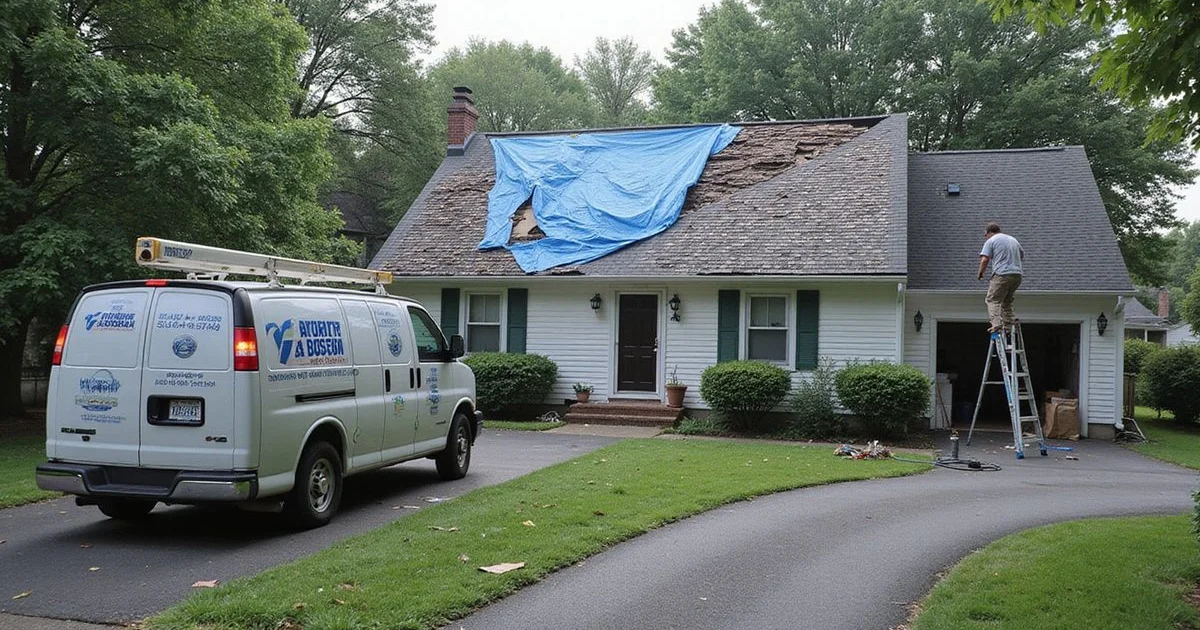
A tree limb through the roof, shingles torn off in a windstorm, or a sudden leak spreading across the ceiling all trigger the same instinct: fix it now. The right first moves matter, but they are not always the ones people reach for first. Getting the order right limits damage and keeps everyone safe until a professional can take over.
First: get people safe, then assess from the ground
If the damage is severe, structural sagging, a large hole, or anything that suggests the roof could fail further, get everyone out of the room or area directly below it. Do not go onto the roof yourself, especially in wet or windy conditions; roofs are more slippery and structurally uncertain right after damage than they look. Walk the perimeter of your home from the ground to note visible damage: missing shingles, a dented gutter, a fallen limb, or an obvious hole.
Second: stop water from spreading inside
If water is actively entering the house, the priority shifts indoors:
- Move furniture, electronics, and valuables away from the affected area.
- Place buckets or containers under active drips, and lay towels or tarps to protect flooring.
- If you see a bulge in the ceiling from trapped water, carefully puncture a small hole at the lowest point of the bulge with something like a screwdriver, over a bucket, to let it drain in a controlled way rather than risk a larger section of ceiling collapsing on its own.
- Photograph everything before you clean up or move items, both for your own records and for a potential insurance claim.
Turn off power near the affected area if water is spreading
If water is tracking near light fixtures, outlets, or a ceiling fan, treat electrical safety as a priority alongside the water itself. Shutting off the breaker to the affected area, or the main breaker if you are unsure which circuit is involved, removes the risk of electrical shock while you deal with containment. If you smell anything burning or see sparking, leave the area and call an electrician before doing anything else.
Third: call for a tarp or temporary cover
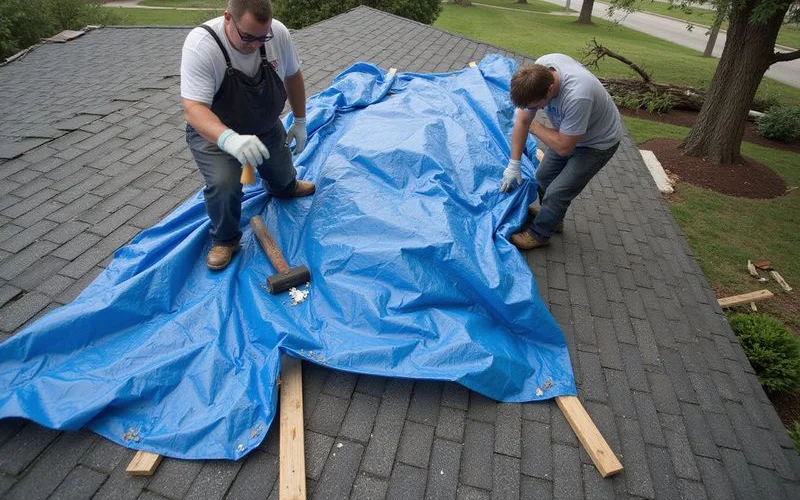
A temporary tarp, professionally installed, is usually the fastest way to stop further water intrusion until full repairs can happen. Many roofers offering 24/7 emergency roofing services in Connecticut specialize in exactly this kind of rapid response. Do not attempt a DIY tarp job on a steep or wet roof; a poorly secured tarp can blow off in the next wind gust and leave you back where you started.
| Situation | First move |
|---|---|
| Active leak, water inside | Contain water, protect belongings, photograph damage |
| Visible hole or missing section | Call for emergency tarping, avoid going on the roof |
| Fallen tree limb on roof | Stay clear of the area, call a professional before moving debris |
| Widespread storm damage, no active leak yet | Photograph exterior damage, schedule an inspection soon |
Documenting damage for insurance
Photos taken before any cleanup or temporary repair are the most useful evidence for an insurance claim. Note the date, and if you know it, the specific storm or event responsible. A roofing contractor’s inspection report after the emergency response adds professional documentation that supports the claim beyond photos alone.
What happens after the emergency response
Once the immediate danger is handled and water intrusion is stopped, the next step is a full assessment and repair plan, not a rush decision made in the middle of a stressful moment. Take the time to compare quotes and confirm any contractor’s registration before committing to permanent repair work, even if the emergency response itself needed to happen fast. For ongoing repair after the immediate crisis passes, roofing contractors across Connecticut are a reasonable place to start comparing options once things have calmed down, and this directory’s rubric page explains how those listings are ranked. For preventing the next storm from catching you off guard, the winter roof prep checklist covers the maintenance that heads off many emergency calls in the first place.
Emergency roof damage feels urgent in every direction at once, but the actual priority order is simple: safety first, then contain water indoors, then get a temporary cover in place. Everything else, including the permanent fix, can wait for daylight and a clear head.
FAQ
- Should I go up on my roof to check damage myself?
- No, not right after a storm. Wet or damaged roofs are unstable and slick, and downed power lines or debris can make the area around your home dangerous. Assess visible damage from the ground and let a professional handle the roof itself.
- What do I do about water actively coming into my house?
- Move furniture and valuables away from the leak, place a bucket or container to catch water, and if the ceiling is bulging with trapped water, carefully puncture a small controlled hole to let it drain rather than let it collapse on its own.
- How fast can an emergency roofer usually respond?
- Response times vary by contractor and by how widespread the storm damage is across your area. Many roofers who advertise 24/7 emergency service prioritize active leaks and structural exposure over routine repair calls.
- Will a tarp over the damage hold until a full repair happens?
- A properly installed tarp can hold for days to a couple of weeks depending on weather, but it is a stopgap, not a fix. Schedule the actual repair as soon as you reasonably can.