
Gutter installation in Connecticut: how it works and how long it takes
By Dana Whitfield · Updated 2026-07-11
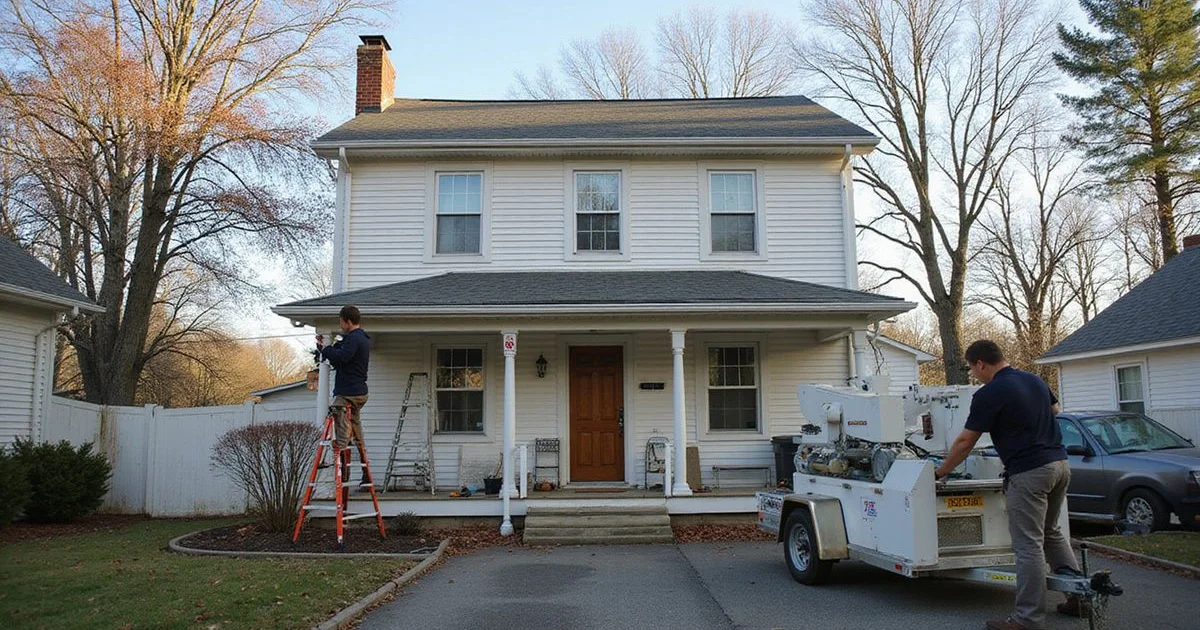
New gutters are one of the more straightforward roofing-adjacent jobs, but “straightforward” does not mean it happens in an hour. Understanding the actual steps, and what can add time to the job, helps you plan around the install and spot a rushed job if one happens.
Before the crew arrives: measuring and material choice
A gutter contractor typically starts with a site visit to measure the linear footage around the roofline, check the slope needed for proper drainage, and assess the condition of the fascia board the gutters will attach to. This is also when material gets decided: vinyl is the least expensive option, aluminum is the most common choice for its balance of cost and durability, steel holds up well under heavy snow load, and copper is the premium option that develops a distinctive patina over time. Most seamless aluminum systems are formed on a truck-mounted machine parked in the driveway on install day, cut to the exact length needed for each run.
What installation day looks like
- Removal of the old system, if one exists, including old hangers and any damaged fascia boards.
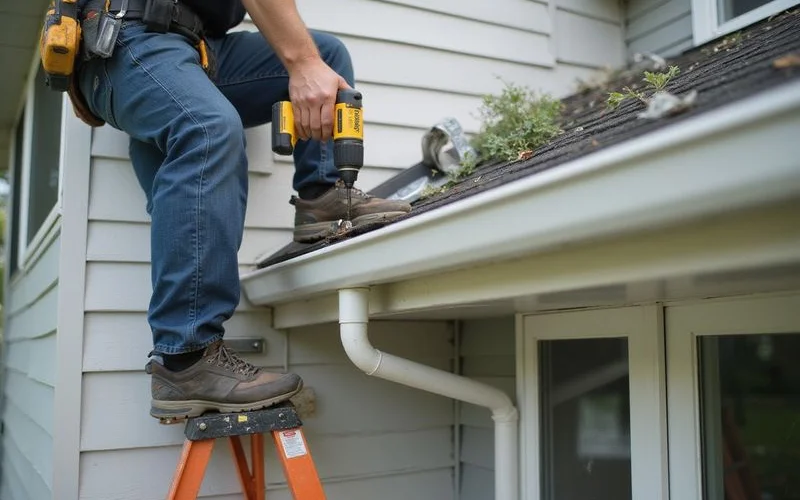
- Fascia inspection and repair. Rotted or soft fascia gets replaced before new gutters are hung, since gutters mounted to bad wood will eventually sag or pull loose.
- Forming and cutting the new gutter sections to length on-site for a seamless fit.
- Hanging and pitching each run so water flows toward the downspouts rather than pooling.
- Downspout placement and connection, positioned to direct water away from the foundation.
- Guard installation, if included, and a final walkthrough to check every joint and hanger.
For a typical single-family home, this whole sequence runs about 4 to 8 hours. Homes with more complex rooflines, multiple stories, or fascia repair needed along the way can push into a second day.
| Step | Typical time added |
|---|---|
| Standard install, good fascia condition | Half a day |
| Full home, seamless aluminum, no repairs needed | Full day |
| Fascia repair needed | Half day to full day extra |
| Gutter guards added | 1-3 hours extra |
What separates a good installation from a rushed one
The most common praise in reviews for gutter and siding work in Connecticut centers on clean job sites, thorough cleanup, and crews that communicate clearly about timing and any surprises found along the way, like fascia rot. The complaints that show up tend to trace back to gutters pitched incorrectly so water pools instead of draining, or downspouts dumping water right next to the foundation instead of away from it. Ask your installer to walk you through the pitch and downspout placement before they leave, since both are easy to check and hard to fix well after the fact.
Seamless versus sectional, and why most installers default to seamless
Sectional gutters, assembled from pre-cut lengths joined with connectors, used to be the standard and are still available at a lower cost. Seamless gutters, formed on-site to the exact length of each roofline run, have largely replaced them for professional installs because every joint is a potential leak point, and a seamless run has only the joints at corners and downspouts instead of one every ten feet. The tradeoff is that seamless gutters require the forming equipment on-site, which most professional installers carry but a smaller handyman operation may not.
Getting quotes and choosing an installer
Gutters are one of the higher-demand categories for roofing-adjacent work in Connecticut, which means there is no shortage of installers to compare. Look for a written quote that specifies material, linear footage, guard inclusion if applicable, and whether any fascia repair is anticipated or billed separately if found. You can browse gutter and siding contractors in Connecticut to compare options, and see how this directory ranks and scores providers on its rubric page before you request quotes. If a full roof job is part of the same project, the step-by-step roof replacement guide walks through that timeline too.
A well-installed gutter system is easy to forget about, which is really the goal. It quietly moves water away from your roofline, fascia, and foundation for years without drawing attention to itself. A poorly pitched or badly hung system reminds you it exists every time it rains, so it is worth the same care in choosing an installer that you would give to any other part of the roof. Browsing roofing contractors across Connecticut is a reasonable next step if gutters are part of a larger project.
FAQ
- How long does a full gutter installation take?
- Most single-family homes are done in one day, sometimes finished by early afternoon if the crew is not also removing an old system. Larger homes, homes with complex rooflines, or jobs that include fascia repair can stretch to two days.
- Do I need to be home during gutter installation?
- Not necessarily, though it helps to be reachable if the crew finds fascia damage or needs a decision about downspout placement. Many homeowners arrange access and let the crew work independently.
- Seamless or sectional gutters: does it matter?
- Seamless aluminum gutters are formed on-site from a single length of material, which means fewer joints and fewer potential leak points than sectional gutters assembled from pre-cut pieces. Most professional installers in Connecticut default to seamless for this reason.
- Should I add gutter guards during installation?
- Guards reduce how often you need to clean gutters by keeping out leaves and debris, at an added cost. They are worth it for homes surrounded by mature trees and less necessary for homes with little tree cover.